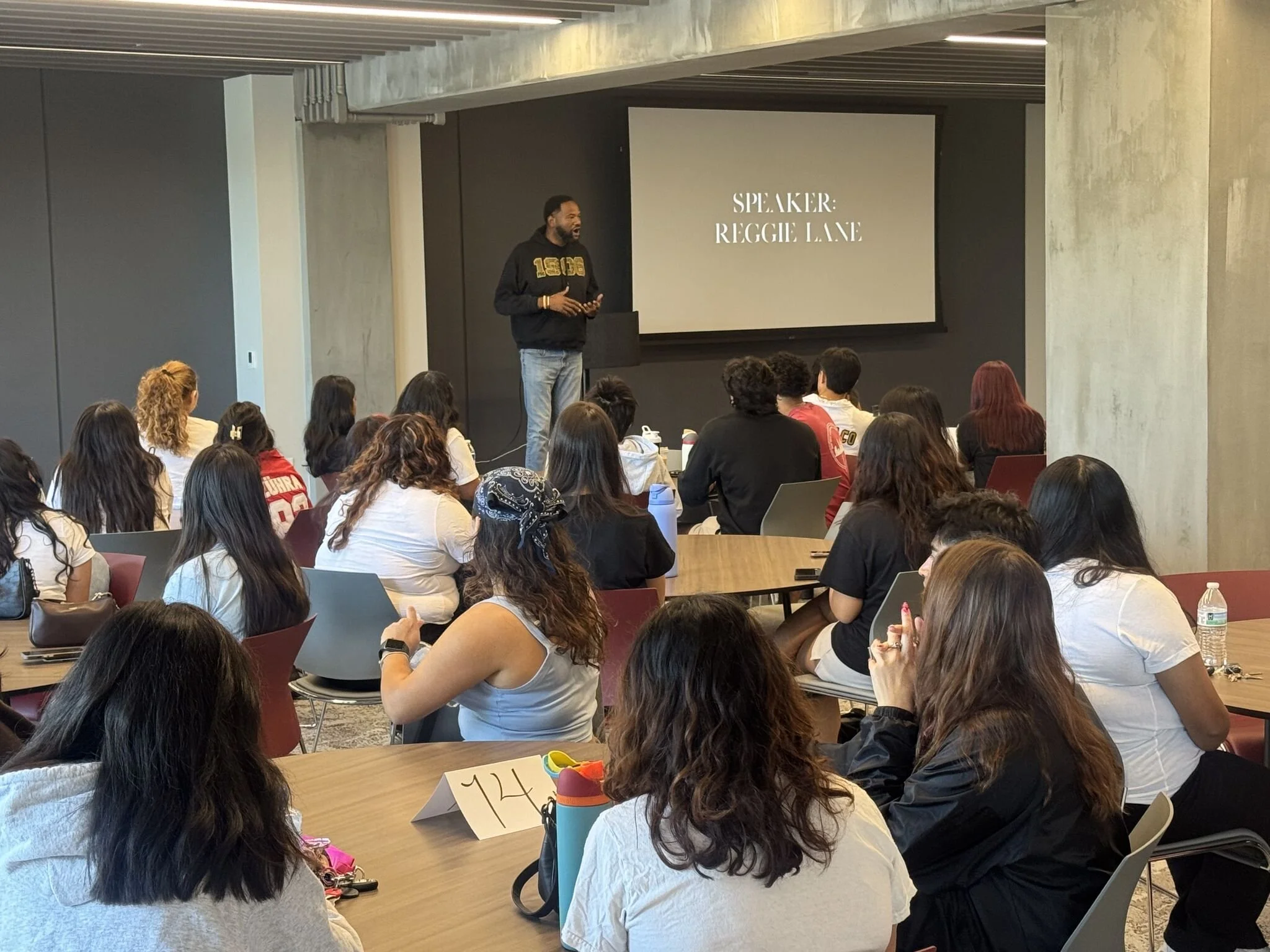
Welcoming
Reggie Lane
-
We feel the best way to attract students to a program relies on promotion that is clear about tangible value and clearly answers the "so what?" regarding topic. Sharing "behind-the-scenes" snippets, short-form video, pull quotes establish interest and a sense of authenticity. Since students are often "time-poor," emphasize the timing and format— 60-minute talk followed by a high-energy, interactive Q&A. Finally, tap into the "fear of missing out", how skipping or missing out on the message effect by shared student experience.
Photos for any marketing or promotion can be found below. Include Reggie in your posts @reggielane06 and @with.the.hart.collective.
-
The speaker is comfortable working with all types of setups. Please aim to accommodate these requests as closely as possible.
Every speaking area will need to be well lit.
Auditoriums: curtain down, full or center-focused light wash; house lights down during the program
Ballrooms and Other Flat Rooms: A raised speaking area is preferred (at least 8’x8), lights focused on speaking area
-
For all keynotes and programs of 100 or more.
For the Speaker:
One handheld wireless microphone.
LCD projector with an HDMI cord, screen, and a support cart with an electrical outlet for the speaker's laptop (Speaker provides their own computer).
Flat-top stool or a small table on the stage for water.
One small bottle of water per presentation.
For the Pre-Program & Introduction:
Music playing as participants enter is encouraged but not required.
A separate podium with a microphone set off to the side for the person giving the introduction.
-
Tone: High Energy / Anticipatory / Engaging
Introduction:
Michelle Guobadia might be a little more real and in-your-face than you expect from a speaker—and she’s totally fine with that. Known for telling it like it is, Michelle’s mission is to shake things up, especially when it comes to hazing, toxic traditions, and outdated leadership models. If you don’t
-
To ensure the speaker's message doesn't evaporate the moment students leave the room, you need to bridge the gap between inspiration and daily habit.
Deploy "Nudge" Content: Send out a series of micro-lessons, "challenges" or impact statements/slides from the presentation. Breaking the keynote down into bite-sized, actionable prompts prevents cognitive overload and keeps the themes top-of-mind.
Establish Peer Accountability: Create a dedicated space on your meeting agendas, where check-in with yourself and others on how they are applying the speaker's advice. Peer validation is a powerful motivator; seeing a classmate succeed using the speaker’s framework creates a "social proof" loop that sustains momentum.
Gather Feedback: If you are surveying those in attendance, ask that they make a commitment to be a part of the challenge or change that was identified and discussed. Position or not, all members of a community contribute. If you gather feedback about the speaker or the message, we invite you to share it back with us so we can improve the program and promote its impact to other audiences.
-
Prior to your program, you will receive an invoice. You have 15 days following your program to remit payment before additional fees will be applied.